Barbara Vanderhoof
Remarkably Bright CreaturesBarbara Vanderhoof, known among her friends as Barb, is a member of the Knit-Wits and one of Tova Sullivan’s close companions. Her frank advice, lively interest in her family, and readiness to turn concern into action make her a steady presence in Tova’s life. As Tova approaches retirement and prepares to leave her home, Barbara’s friendship appears in practical gestures: checking on her, bringing a farewell cake, and finally considering a home for Cat.
Identity and Character
Barbara is sociable and outspoken, with a taste for dramatic turns of phrase and a firm view of how people ought to look after themselves. When Tova tries to dismiss a mark on her arm, Barbara urges her to have it checked and backs up the advice with a story about her daughter Andie’s worsening rash. Her story is secondhand, but the point is direct: ignoring a health concern can make it worse. Tova’s embarrassment does not deter Barbara from speaking plainly.
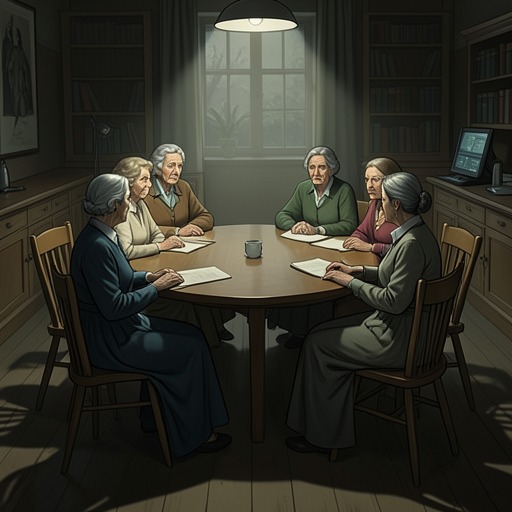
Her appearance is similarly expressive. At one gathering she wears her cropped gray hair in gel-set spikes, a style she jokes suits a Barb because it gives her barbs. The others in the Knit-Wits laugh at the pun. Tova privately imagines testing whether one of the spikes would prick like an aquarium sea urchin or collapse beneath a touch; the moment places Barbara’s conspicuous hairstyle within the familiar, teasing intimacy of the group. Barbara herself is not simply a source of comic fussiness: Tova admires her efficiency at cutting through other people’s evasions.
Family and the Knit-Wits
Barbara readily talks about her daughters and grandchildren. When Janice Kim asks what is new, Barbara recounts that Andie had planned to bring the girls for their summer break but that something had disrupted the plans. She adds that Andie and her husband, Mark, took the children to Las Vegas for Christmas, and complains that they have not visited since the previous Thanksgiving. The account shows both her appetite for family news and the distance she feels when visits do not happen as she expects.
The Knit-Wits are a setting in which Barbara’s stories meet affectionate correction. She recalls working at St. Ann’s after Rick died, explaining that she needed something to pass the time and presenting the job as running the office. Mary Ann Minetti reduces the claim to filing, while Janice notes that Barbara quit because the office could not be kept organized to her standards. Their teasing gives the exchange its balance: Barbara can narrate her own efforts expansively, but her friends know her well enough to supply the less grand version. The discussion also provides a point of comparison with Tova, whose work involves washing floors rather than office filing.
Friendship with Tova
Barbara’s concern for Tova recurs as Tova tries to keep her circumstances to herself. At Colette’s Beauty Shop, where both women are having their hair done, Barbara leans toward her under the hair dryer and asks how she is doing with an emphasis that anticipates an evasive answer. Tova recognizes Barbara’s habit of slicing through nonsense and admires it. The salon scene makes their friendship more than shared attendance at the Knit-Wits: Barbara notices when Tova is not ready to speak, yet continues to make room for an honest answer.
Barbara also accompanies concern with tangible gestures. When Tova accepts supper at Ethan Mack’s house, Barbara presses a bottle of Cab Franc into her hands and describes it as a suitable gift for a date. Tova insists that the meal is only supper, not a date, but Barbara’s teasing makes visible the possibility of companionship that Tova herself keeps trying to minimize. Later, when Tova is preparing to leave her home and finish working, Barbara helps mark the transition. On Tova’s last day at work, she arrives with Janice at Tova’s porch carrying a light rectangular box. Inside is a small fish-shaped cake iced with congratulations on Tova’s retirement. The gift’s shape connects the friends’ farewell to Tova’s work at the aquarium without turning the moment into a grand ceremony.
Retirement and Cat
The retirement visit also brings the question of Cat’s future into the open. Tova explains that Cat cannot come with her and may have to return to living outside full-time, then asks whether either visitor wants a pet. Janice refuses because her husband is allergic and her dog is afraid of cats. Barbara answers that she is a dog person, but Cat leaps onto her lap, purrs, and presses his head against her chin. Tova points out that she has already treated him for fleas. Barbara is still rubbing his belly when she says she will think about it.
The exchange gives Barbara a small, concrete change rather than a dramatic transformation. Her stated preference does not immediately disappear, and the evidence does not establish that she ultimately takes Cat home. But her hands are already contradicting her hesitation: she strokes him while considering the possibility. When Tova laughs that people can change, and Janice adds that this applies even to old folks, Barbara remains open to reconsidering. In the context of Tova’s impending move, that pause matters. Her friends cannot simply remove every consequence of the transition, but they can help face its practical questions together.
Narrative Role
Barbara’s role is built from repeated acts of attention rather than a separate plot of her own. She notices a mark Tova wants to dismiss, presses for a real answer at the salon, brings wine to an evening Tova insists is not a date, and joins Janice in bringing a retirement cake. Her stories about her family and her own time at St. Ann’s keep the friendship reciprocal: she is not only a caretaker of Tova but also someone whose habits, disappointments, and history are known to the group.
The small negotiations around the cake and Cat underscore the difference between being present for a friend and deciding for her. Barbara participates in Tova’s farewell without making it into the sort of celebration Tova says she does not need, and she considers taking Cat without promising what she has not yet decided. Her final response is characteristically tentative but warm: she may be a dog person, yet Cat’s weight on her lap and his trusting affection leave the question open.